
You’ll get perfectly tender Yukon Golds by boiling whole small potatoes 15–20 minutes, halved medium potatoes 12–15 minutes, and 1‑inch cubes 8–10 minutes; test doneness with a fork that slides in easily. Start them in cold salted water, simmer gently, and drain promptly to stop cooking. For mashed potatoes use 1–1.5‑inch chunks; for salads keep pieces slightly firmer. Keep sizes even for uniform results, and continue for tips on texture, seasoning, and alternate methods.
Best cooking time for boiling Yukon Gold potatoes
For perfect Yukon Golds, you’ll want exact boil times based on potato size and how you’ve cut them — whole small potatoes take about 15–20 minutes, halved medium ones 12–15 minutes, and 1-inch cubes 8–10 minutes.
Check doneness by piercing with a fork or paring knife: it should slide in easily with just a bit of resistance and the edges should be tender, not mushy.
If you’re unsure, test a few pieces from different parts of the pot so you don’t overcook the batch.
Exact boil times by potato size and cut
Whether you’re boiling whole Yukon Golds, halving them, or cutting them into chunks, precise timing makes the difference between creamy and mealy results.
For medium whole potatoes, simmer 20–25 minutes; halved, 12–15 minutes; quartered or 1-inch chunks, 8–10 minutes.
If you’re wondering how long to boil Yukon Gold potatoes for mashed or salad, use these targeted times and start timing once water simmers.
How to tell when Yukon Gold potatoes are done
Wondering how to know when your Yukon Golds are perfectly cooked? Pierce a cube or whole potato with a fork or paring knife; it should slide in easily with minimal resistance and the flesh should feel tender but not mushy.
Cut one open—moist, even texture and no chalky center mean they’re done.
Drain promptly to stop cooking and preserve texture.
Step-by-step guide to boiling Yukon Gold potatoes
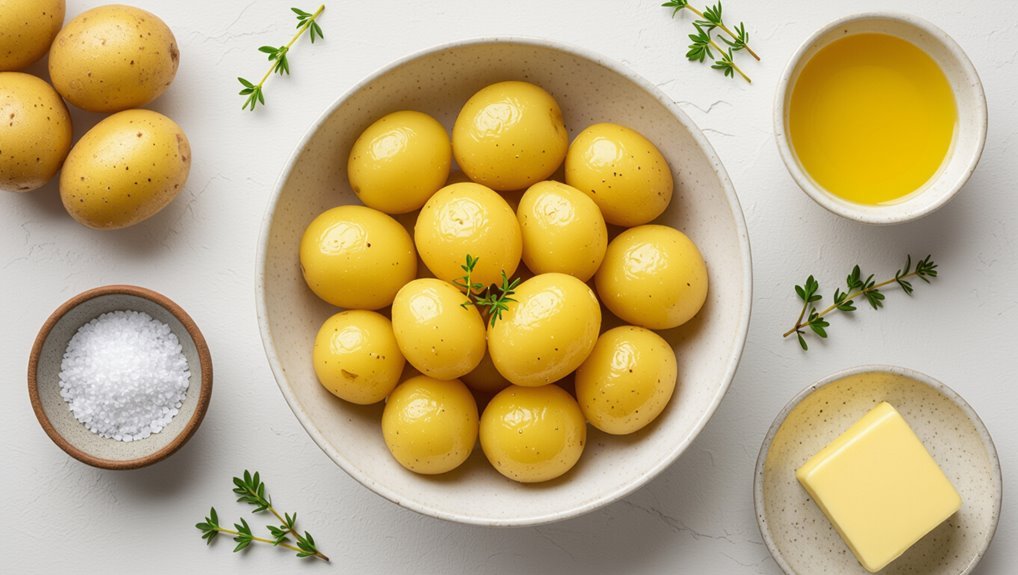
Start by washing, peeling if you like, and cutting your Yukon Golds into even pieces so they’ll cook uniformly.
Pick a pot that gives the potatoes room, cover them with cold water by about an inch, and bring to a gentle simmer over medium heat.
Cook until tender, then drain and cool briefly before using or serving.
Preparing potatoes: washing, peeling, and cutting
Before you drop Yukon Golds into boiling water, give them a quick rinse, peel if you prefer, and cut to even sizes so they cook uniformly.
Scrub under cold running water to remove dirt. Trim bruises or sprouts with a paring knife.
For mashed potatoes, cut into 1–1.5-inch chunks; for salads, halve or quarter larger tubers.
Pat dry before cooking.
Choosing the right pot, water level, and heat
When you pick a pot, choose one large enough that the potatoes sit in a single layer or have a little room to move—crowding slows cooking—then cover them with cold water by about 1 inch so they heat evenly from the start.
Use a heavy-bottomed pot for steady heat, leave room at the top to prevent boil-overs, and start with moderate heat to maintain a gentle, consistent simmer.
Stepwise cooking process from cold water to simmer
Although you’ve already chosen the right pot and added an inch of cold water, place the potatoes in a single layer.
Bring the pot to a gentle boil over medium heat, then immediately reduce to a simmer so they cook evenly without splitting.
Tighten the lid slightly, maintain low bubbling, check doneness with a fork after 10–15 minutes, and adjust heat to prevent vigorous rolling.
Draining and cooling after boiling
Once the potatoes reach fork-tenderness, drain them immediately in a colander to stop cooking and prevent sogginess; give the pot a quick shake to loosen any that stick.
Rinse briefly with hot water only if removing starch for salads.
For mashed potatoes, let them steam-dry in the colander for a minute or two, then transfer to a warm bowl to finish seasoning and mashing.
Boil times for common recipes and uses
When you’re cooking Yukon Golds for different dishes, the size and cut will change how long you boil them. Below is a quick reference to help you match cut to recipe and timing. Use it to decide whether to simmer whole, halve, cube, or prep for salad.
| Cut | Typical Use | Boil Time |
|---|---|---|
| Whole small Yukon Golds | Roasted or served whole | 12–15 minutes |
| Halved or quartered | Sides, sautés | 8–12 minutes |
| Cubed for mashed potatoes | Mashing, purees | 10–12 minutes |
Whole small Yukon Golds
For whole small Yukon Golds—about 1 to 1½ inches across—plan on 12–15 minutes in gently boiling water for fork-tender, versatile potatoes you can serve whole, halve, or use in salads.
Start them in cold water, salt lightly, and simmer gently to cook evenly.
Drain promptly, let steam-dry a minute, then dress or serve warm to retain texture and flavor.
Halved or quartered potatoes
Halve or quarter Yukon Golds to speed cooking and get even, tender results for salads, mashes, or skillet sautés—boil them in gently simmering, salted water for about 8–12 minutes depending on size and whether you want them just fork-tender or falling-apart soft.
Drain promptly to stop cooking; cool for salads or mash while warm.
For sautés, pat dry and finish in a hot skillet until crisp.
Cubed for mashed potatoes
Cut your Yukon Golds into uniform 1-inch cubes so they cook evenly, then simmer them gently in salted water and expect about 10–15 minutes until they’re fork-tender for classic, creamy mashed potatoes.
Drain promptly, return to the hot pan to steam briefly, then mash with butter and warm milk or cream.
Season to taste and serve immediately for best texture.
Boiling for potato salad
If you’ve just finished prepping Yukon Golds for mash, you can use a slightly different approach when making potato salad: leave the cubes or chunks a bit larger and boil them to hold their shape.
Cook 1–1½ inch pieces in simmering salted water for about 10–12 minutes until tender but firm.
Drain, cool slightly, then dress to taste.
Factors that affect boiling time
The time it takes to boil Yukon Golds depends on a few key things you can control or note beforehand.
Larger, oddly shaped, or older potatoes take longer, and whether you start them in cold or already-hot water changes the total cook time.
Altitude and your stove’s heat output affect boil temperature, and adding salt or acidic ingredients will slightly alter how quickly they soften.
Potato size, shape, and age
Potato size, shape, and age all change how long Yukon Golds need to boil: larger or thicker potatoes take longer because heat travels farther to the center, oddly shaped tubers heat unevenly, and older potatoes—being drier and starchier—cook faster than fresh, waxier ones.
Cut uniform pieces for even timing, test doneness with a fork, and adjust boiling time for bigger or irregular pieces.
Starting water temperature (cold vs. hot)
Ever wondered whether you should drop Yukon Golds into cold water or add them to boiling water?
You’ll usually start raw potatoes in cold water so they heat evenly and cook through without a mushy exterior. Adding potatoes to boiling water speeds the process but risks uneven doneness and cracking.
For uniform tenderness, begin in cold, then bring to a simmer.
Altitude and stove type
Because water boils at lower temperatures as altitude rises, you’ll need to cook Yukon Golds longer or use adjustments to get them tender.
On high-altitude gas or electric stoves, increase boiling time or simmer gently under a lid to conserve heat.
With induction, you’ll retain more consistent heat and may need slightly less time.
Test with a fork for doneness.
Salt and acidity in the cooking water
While salt won’t dramatically change how long Yukon Golds take to cook, it does raise the boiling point slightly and seasons the potatoes from the inside as they absorb water.
So you should add about 1–2 teaspoons of kosher salt per quart of water once it comes to a boil.
Acidic ingredients like vinegar or lemon slow softening; avoid adding them until potatoes are tender.
Alternative methods and time comparisons
You can compare steaming, pressure cooking, microwaving, and roasting to find the fastest or gentlest method for Yukon Golds. Below is a quick visual to guide timing expectations. Try the method that fits your time and texture goals.
| Method | Time (small/whole) | Result |
|---|---|---|
| Steaming | 12–18 min | Tender, moist |
| Instant Pot | 6–10 min | Fast, evenly cooked |
| Microwave/Roast | 4–8 min / 30–45 min | Quick but variable texture |
Steaming vs. boiling times
If you want tender Yukon Golds quickly and with less waterlogging, steam them instead of boiling; steaming usually takes about 12–18 minutes for medium-cut pieces versus 15–20 minutes for boiling whole small potatoes.
You’ll get firmer edges, brighter flavor, and less nutrient loss. Cut size, steamer fit, and lid sealing affect time, so check doneness with a fork periodically.
Instant Pot/pressure cooking times
Steaming’s faster, gentler heat makes it tempting, but pressure cooking can beat it for speed and consistency when you’re short on time.
Use 1 cup water, a trivet, and whole small Yukon Golds: 6–8 minutes at high pressure with quick release.
Halved potatoes need 4–5 minutes. Release immediately to avoid overcooking; they’ll be fork‑tender and ready for mashing or salads.
Microwave and roasting time comparisons
Wondering whether to zap or roast your Yukon Golds? You can microwave halved potatoes 6–10 minutes, stirring or flipping halfway, for quick tender results.
Roasting gives caramelized skins: toss whole or cubed with oil, roast at 425°F (220°C) — 25–35 minutes for cubes, 35–50 minutes for whole small potatoes, turning once for even browning.
Common mistakes and how to avoid them
You’ll avoid most boiling problems if you pay attention to timing, water, and doneness.
Common pitfalls include:
- Overcooking and ending up with mushy potatoes
- Undercooking and getting an uneven, chalky texture
- Using too much or too little water, which affects heat distribution
I’ll show quick fixes for each so your Yukon Golds turn out right every time.
Overcooking and mushy potatoes
If you cook Yukon Golds too long, they’ll turn grainy and fall apart, leaving you with mush instead of tender, waxy potatoes.
To prevent that, start timing once water simmers, check with a fork at 10–15 minutes depending on size, drain immediately when tender, and shock briefly in cold water if needed.
Don’t leave them sitting in hot water.
Undercooking and uneven texture
When potatoes are undercooked or boiled unevenly, you’ll get a mix of chalky centers and over-soft edges instead of uniformly tender Yukon Golds.
To prevent that, cut pieces evenly, start them in cold water, and keep a gentle simmer.
Check doneness with a fork in several pieces; remove as soon as they yield.
Drain promptly to stop cooking and avoid patchy texture.
Using too much or too little water
After checking doneness and draining to stop carryover cooking, pay close attention to the amount of water you use.
Too much water wastes energy and dilutes flavor; too little causes uneven cooking and scorched bottoms. Cover potatoes by about an inch for even heat distribution, start in cold water, and adjust as they boil.
Drain promptly to prevent sogginess.
Tips for perfect texture and flavor
Season your cooking water generously and taste as you go so the potatoes aren’t bland.
For silky mashed Yukon Golds, drain them well, return to the hot pot to dry briefly, then mash with warm butter and cream.
If you’re making potato salad, cool the potatoes quickly and dress them while still slightly warm so they absorb flavor.
Salt timing and seasoning recommendations
Salting the water early gives your Yukon Golds the most even seasoning and helps the potatoes absorb flavor as they cook.
Add about 1–2 teaspoons of kosher salt per quart. Taste a small piece near the end and adjust.
After draining, finish with butter or olive oil, a pinch of flaky salt, and fresh herbs or cracked pepper to brighten the dish.
Best practices for mashed Yukon Golds
When you want silky, flavorful mashed Yukon Golds, start by cooking the potatoes evenly and drying them briefly in the hot pot so they absorb butter and cream rather than water.
Mash while warm using a ricer or sturdy masher, add warm cream and melted butter gradually, season to taste, avoid overworking to prevent gluey texture, and fold in fresh herbs or roasted garlic for depth.
Cooling tips for potato salad
If you want potato salad with distinct, creamy bites instead of a soggy mash, cool the potatoes quickly and evenly after cooking so they don’t keep steaming in their skins and leach starch into the dressing.
Drain, spread on a tray to release heat, and air-chill or ice-bath briefly. Toss when mostly cool, then refrigerate covered to let flavors meld without turning gluey.
Quick reference chart for boiling Yukon Gold potatoes
You’ll find a simple chart below to help match cooking time with potato cut and doneness so you get consistent results every time. Use the left column for the cut and the right column for the target time and doneness indicators. Refer to the chart while boiling to check for fork-tenderness or creamy centers.
| Cut | Time & Doneness |
|---|---|
| Whole (small) | 15–20 min — fork slides in, creamy center |
| Halved | 12–15 min — tender with slight resistance |
| Quartered | 10–12 min — tender throughout, holds shape |
| Cubed (1″) | 8–10 min — fork-tender, great for mashing |
Time, cut, and doneness indicators
Because size and cut radically change cooking time, use a simple chart to match your Yukon Golds’ cut to the boiling time and the doneness you want. Choose based on texture: firm for salads, tender for mashing, falling-apart for stews. Check with a fork; it should meet resistance for firm, slide in easily for tender.
| Cut | Boil time |
|---|---|
| Halved | 12–15 min |
| Cubed | 8–10 min |
Frequently Asked Questions
Can I Boil Yukon Gold Potatoes With Skins on or Off?
You can boil Yukon Golds with skins on or off; you’ll keep more nutrients and firmer texture with skins, but peel if you want smoother mashed potatoes. Just scrub well, then boil until fork-tender and drain promptly.
How Does Altitude Change Boiling Time for Potatoes?
Higher altitude lowers boiling temperature, so you’ll need longer to tenderize potatoes; plan 10–25% more time per 1,000 feet above sea level, check doneness with a fork, and adjust until they pierce easily.
Can I Reheat Boiled Potatoes Safely Later?
Yes — you can reheat boiled potatoes safely later. Cool them quickly, refrigerate within two hours, and reheat thoroughly to steaming hot. Don’t refreeze cooked potatoes after reheating; eat them promptly for best safety and quality.
Do Yukon Gold Potatoes Release Nutrients Into Boiling Water?
Yes — they do. When you boil Yukon Golds, some water-soluble nutrients (like vitamin C and B vitamins) leach into the water, and small amounts of minerals can too, especially if you overcook or cut them small.
Will Adding Salt Before Boiling Affect Texture?
Yes — if you salt the water before boiling, you’ll slightly firm the potatoes’ exterior by increasing boiling point and reducing cell wall breakdown. It won’t toughen them, and it can improve seasoning and texture evenly.
Conclusion
You’ve learned the ideal boil times and techniques for Yukon Golds, so you can get perfectly tender, flavorful potatoes every time. Start them in cold, salted water, watch the clock based on size, and avoid overcooking to keep texture and flavor. Use the right method for the dish—mashing, salads, or sides—and try steaming or roasting when appropriate. With these tips, you’ll consistently get great results and fewer kitchen mishaps.

